The Isle of Dread Reimagined 01
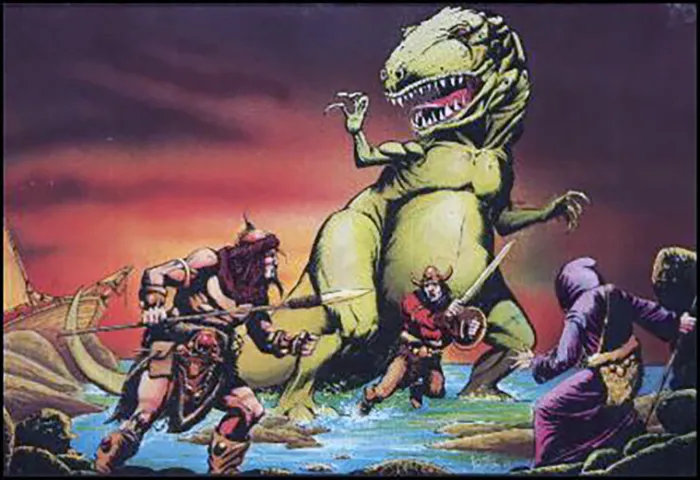
When I was a 15-year-old gamer, I loved the D&D "Blue Box" Expert Set. Now our D&D games were free from the narrow confines of the dungeon! Into the wilderness! Horses, castles, armies, hex maps! Plus a bunch of boring travel rules.
Unlike the "Red Box" Basic Set, which contained two separate booklets - one for players and one for DMs - the Blue Box combined them into a single booklet. To make it up to us, they included 'The Isle of Dread' a big, sprawling, sandbox adventure module set on a lost island, written by legendary old-school D&D authors Tom Moldvay and David "Zeb" Cook.
I did not care for it.
The vibe was all wrong. Tropical jungles were not D&D. Dinosaurs were definitely not D&D. Why would I want dinosaurs when there were dragons around? Dragons are the same thing as dinosaurs, except they can fly, breathe fire, cast spells and have tense conversations with burglarious treasure-hunters.
But that was a limitation of my adolescent sensibilities. In retrospect, I can appreciate that it was designed to introduce players to the idea of wilderness adventures, back when "the dungeon" was the main setting for D&D games. And unlike the linear published adventures of the day, in 'The Isle of Dread' you could just wander all over the place, encountering what was there to encounter.
Which was a rich and motley assortment. In addition to dinosaurs and various tribes of indigenous inhabitants, the Isle of Dread had pirates, zombies, dragons, sinister cat people, friendly monkey people, giant animals of all sorts, ogres, lizardfolk, troglodytes and a brand-new evil mind-controlling species called the kopru. It's a big island, but still - that's a lot to manage.
The Isle of Dread Reincarnated
A lot of people have fond memories of this module, largely because it was shipped as part of the Blue Box rules. So it was something of a common experience for 80s-era gamers. In 2018, a full 37 years after the original module was published, Goodman Games put out a new version of 'The Isle of Dread' updated for fifth edition D&D.
(That wasn't the only time the Isle of Dread returned. In the mid-2000s, Paizo published a series of "adventure paths" - a series of linked adventures - in Dungeon magazine. One of these, "Savage Tide", took the player-characters to the Isle of Dread for several sessions.)
But Goodman Games updated more than just the mechanics - there's new encounter areas, new monsters and new story ideas. Reading through the "reincarnated" edition gave me two thoughts: 1) hmm, you can just take a classic D&D module and make all kinds of changes to it; and 2) hmm, maybe I want to run "The Isle of Dread" after all.
But ... I didn't want to run it using fifth edition D&D. Not long ago I finished a fifth edition D&D campaign that lasted over two years. It was super fun, but it's probably the last time I want to run a campaign using a contemporary edition of D&D. I love a lot about them - cool art, lots of neat character options, interesting settings - but the total lack of narrative mechanics plus every combat encounter taking at least 45 minutes; it's not for me anymore.
If not D&D, then what system? Shadowdark is the version of D&D I have most enjoyed in the past couple years. It's the perfect balance of old-school vibes and flexibility plus new-school streamlined mechanics. It's designed for dungeon-crawling games, but I have faith it can handle the Isle of Dread.
Now, what do I want to change?